

When light meets a curved stone surface, architecture transforms from structure to sculpture. The gentle sweep of natural stone around a corner, the way shadows dance across textured curves : these moments elevate spaces from functional to phenomenal. Today's most innovative architects are discovering that curves don't have to mean compromise, especially with the revolutionary flexibility of ECO-FLEXI MCM brand of Flexible Natural Stone by Angkop Corp.
Gone are the days when curved walls meant heavy structural engineering, complex installation, and design limitations. This breakthrough material combines the authentic beauty of natural stone with unprecedented flexibility, making curved applications not just possible, but effortless.
Step 1: Design with Intention : Planning Your Curved Vision
Every stunning curved wall begins with intentional design thinking. Unlike rigid traditional stone panels, ECO-FLEXI MCM's flexible nature opens up architectural possibilities that were once considered impractical or impossible.
Start by defining your curve's purpose and radius. Are you creating a dramatic lobby entrance that guides visitors through space? Perhaps a spa feature wall that embraces users in natural warmth? Or a restaurant dining room that creates intimate alcoves through gentle stone curves?
The beauty of flexible natural stone lies in its ability to conform to virtually any radius : from tight 2-foot curves to sweeping architectural gestures spanning entire walls. Sketch your vision, considering how the curve will interact with light throughout the day. Natural stone's texture creates ever-changing shadow patterns that bring walls to life.
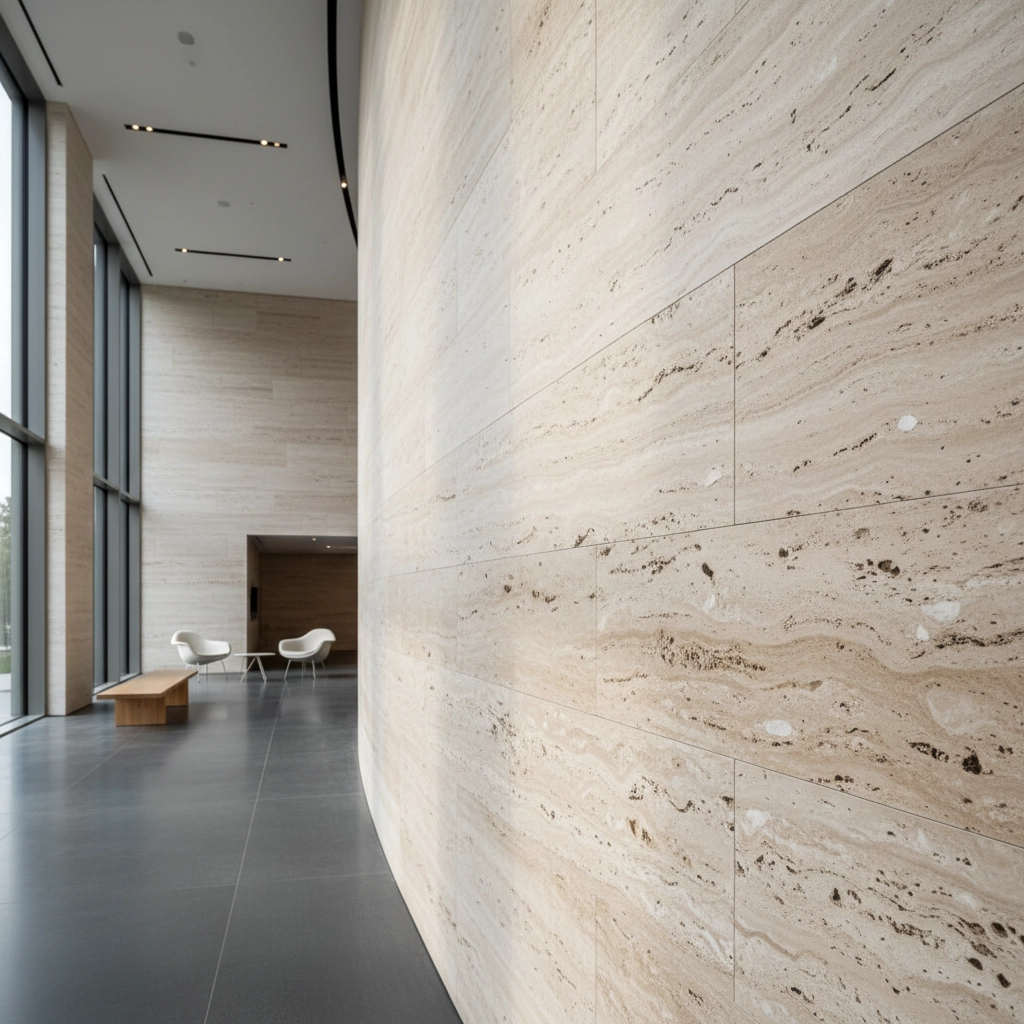
Consider the spatial flow: convex curves push energy outward, creating dynamic, bold statements, while concave curves draw people in, creating intimate, embracing spaces. With ECO-FLEXI MCM, you're not constrained by the material's limitations : you're only limited by imagination.
Step 2: Prepare the Foundation : Engineering for Flexibility
Proper substrate preparation is crucial for curved installations. The revolutionary fiberglass mesh backing of ECO-FLEXI MCM means your foundation needs to be perfectly smooth and properly prepared to showcase the material's flexible capabilities.
Begin with a structurally sound substrate : whether drywall, plywood, or masonry. For curved applications, consider using flexible substrate materials like bendable drywall or creating curved framing that matches your desired radius. The substrate must be clean, dry, and free from any irregularities that might telegraph through the stone surface.
Prime the substrate with an appropriate primer compatible with your chosen adhesive system. This step is particularly important for curved applications, as the primer ensures optimal adhesion across the entire curved surface, preventing potential failure points that could occur with traditional rigid stone panels.
Unlike heavy traditional stone that requires extensive structural support, ECO-FLEXI MCM's lightweight composition (approximately 80% lighter than natural stone) means your curved wall won't require additional structural reinforcement in most applications.
Step 3: Master the Art of Flexible Installation
This is where ECO-FLEXI MCM truly shines. Traditional stone panels would crack, break, or require complex cutting when forced into curves. ECO-FLEXI MCM bends gracefully, maintaining its natural stone appearance while conforming to your architectural vision.
Begin installation from the center of your curve, working outward in both directions. This technique ensures symmetrical alignment and prevents accumulating measurement errors. Apply your adhesive in small sections : the flexibility of the material means you can work more deliberately without rushing.
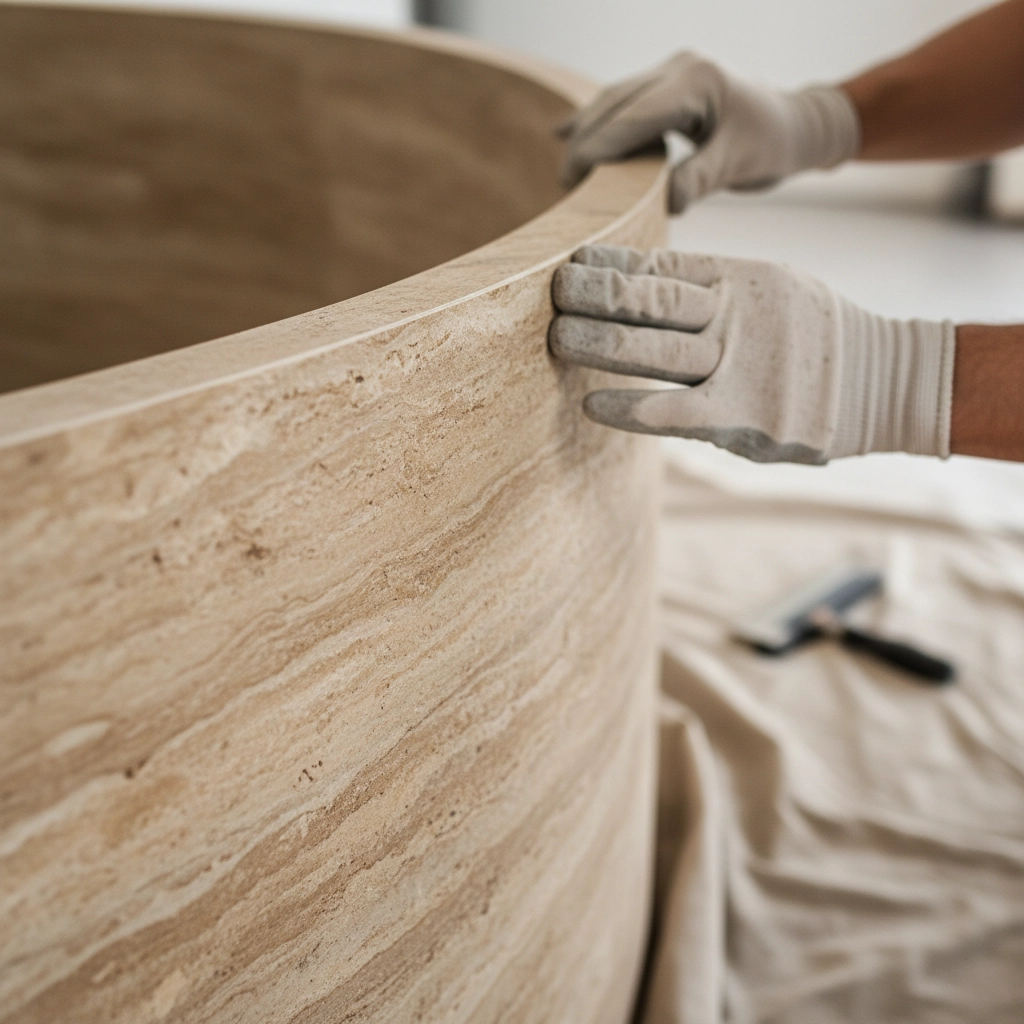
The kiln-cured surface maintains its integrity even when bent, so you'll never see stress fractures or surface damage that might occur with other materials. As you install each piece, gently guide it into the curve, allowing the material's natural flexibility to work with your design rather than fighting against it.
For tight curves, make relief cuts on the backing (never the face) at 6-inch intervals. This technique, impossible with traditional stone, allows ECO-FLEXI MCM to conform to even the most dramatic architectural curves while maintaining a seamless natural stone appearance.
Step 4: Achieve Seamless Integration : Joints and Transitions
The magic of curved stone walls lies in their seamless appearance. ECO-FLEXI MCM's thin profile (typically 1-2mm thick) allows for incredibly tight joints that create the illusion of a single, continuous stone surface bent into shape.
Plan your joints carefully, considering how they'll appear from different viewing angles. Unlike rigid panels that create obvious break lines, flexible stone allows you to position joints strategically : perhaps following natural grain patterns or creating subtle visual rhythms that enhance rather than interrupt the curve.
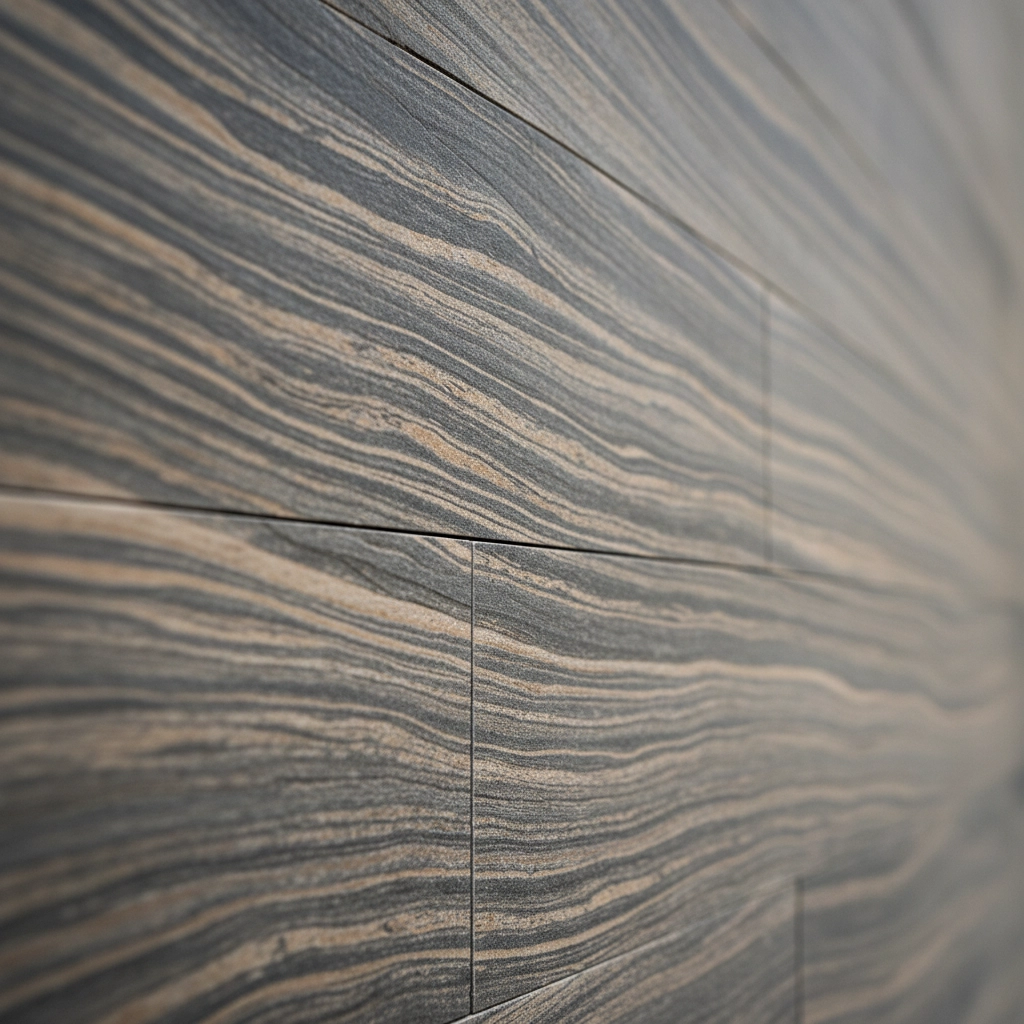
Use flexible sealants that can accommodate the material's natural movement. The ASTM E84 fire-rated composition of ECO-FLEXI MCM maintains its safety ratings even in curved applications, making it suitable for commercial lobbies, restaurants, and hospitality spaces where fire safety is paramount.
For transitions between curved and straight sections, ECO-FLEXI MCM's flexibility allows gradual transitions that would require complex cutting and fitting with traditional stone panels. This capability opens up design possibilities that simply weren't feasible before.
Step 5: Perfect the Details : Finishing for Impact
The final step transforms your curved stone installation from impressive to extraordinary. Proper edge treatments, lighting integration, and surface finishing bring out the full potential of your curved stone wall.
Consider integrated lighting that emphasizes the stone's natural texture and the dramatic shadows created by the curve. LED strip lighting behind or beside the curved wall creates stunning highlight and shadow effects that change throughout the day.
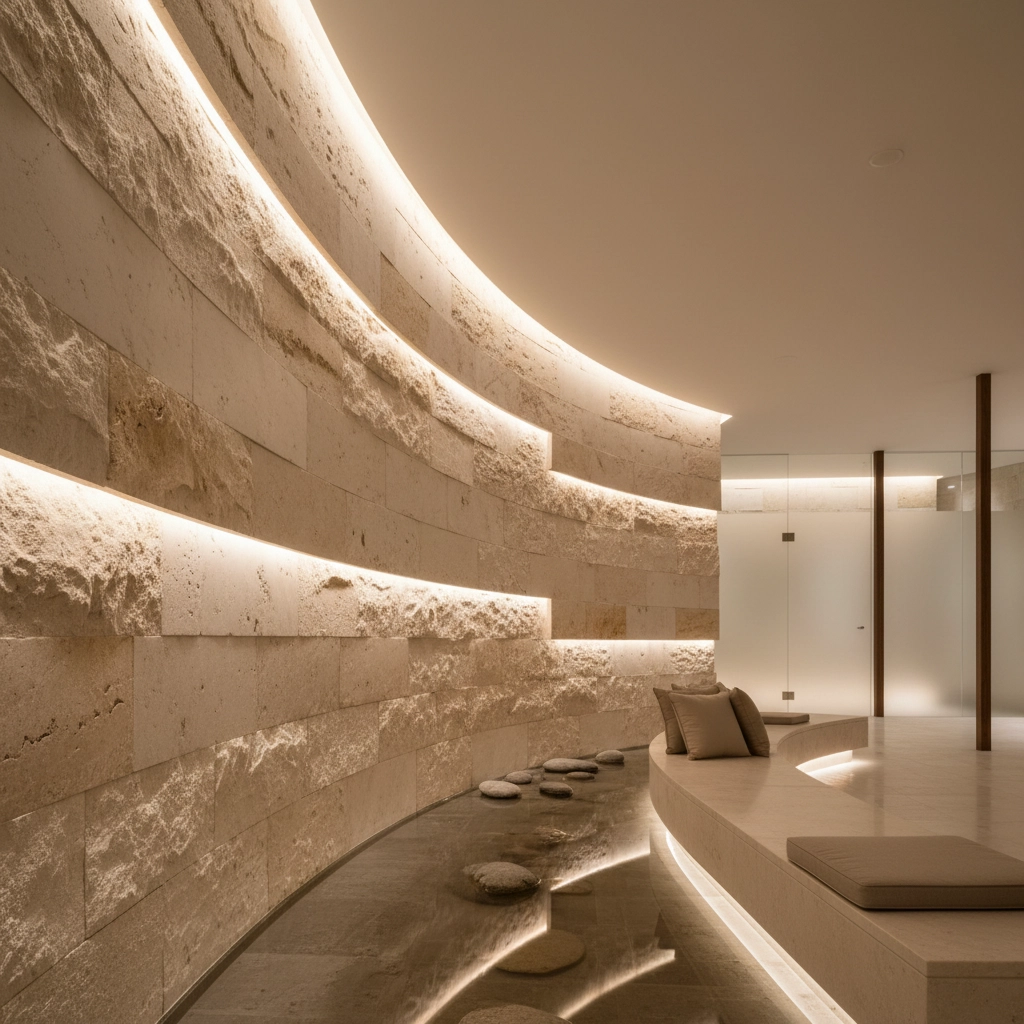
Edge treatments deserve special attention in curved applications. ECO-FLEXI MCM's flexibility allows for wrapped edges that continue the stone appearance around corners and transitions : something impossible with rigid traditional stone panels. This continuity creates a more sophisticated, seamless appearance.
The naturally slip-resistant surface of ECO-FLEXI MCM requires minimal maintenance while providing the authentic look and feel of natural stone. A simple protective sealer enhances the natural colors and provides additional stain resistance, particularly important in high-traffic commercial applications.
Where Curved Stone Walls Transform Spaces
The applications for curved flexible stone walls are virtually limitless. In luxury hotel lobbies, curved stone columns clad in ECO-FLEXI MCM create dramatic focal points that guide guests through the space. Restaurant designers use curved stone walls to create intimate dining alcoves that feel private yet connected to the larger space.
Residential applications are equally striking. Curved stone accent walls in master bedrooms create sophisticated focal points, while curved kitchen islands clad in flexible stone become sculptural centerpieces that blend function with artistry.
Spa and wellness centers particularly benefit from curved stone applications : the organic, flowing forms create the sense of being embraced by natural materials, enhancing the relaxation and restoration experience that clients seek.
The Future of Curved Architecture
As architecture moves toward more organic, human-centered design, materials like ECO-FLEXI MCM brand of Flexible Natural Stone by Angkop Corp enable designers to create spaces that feel more natural, more welcoming, and more emotionally engaging.
The combination of authentic natural stone aesthetics with revolutionary flexibility means curved walls are no longer special occasion features : they can become integral elements of thoughtful architectural design.
Ready to explore the possibilities of flexible natural stone for your next curved wall project? Discover the complete collection of textures, colors, and applications at angkop.ca and redefine what's possible in your architectural vision.

0 comments